
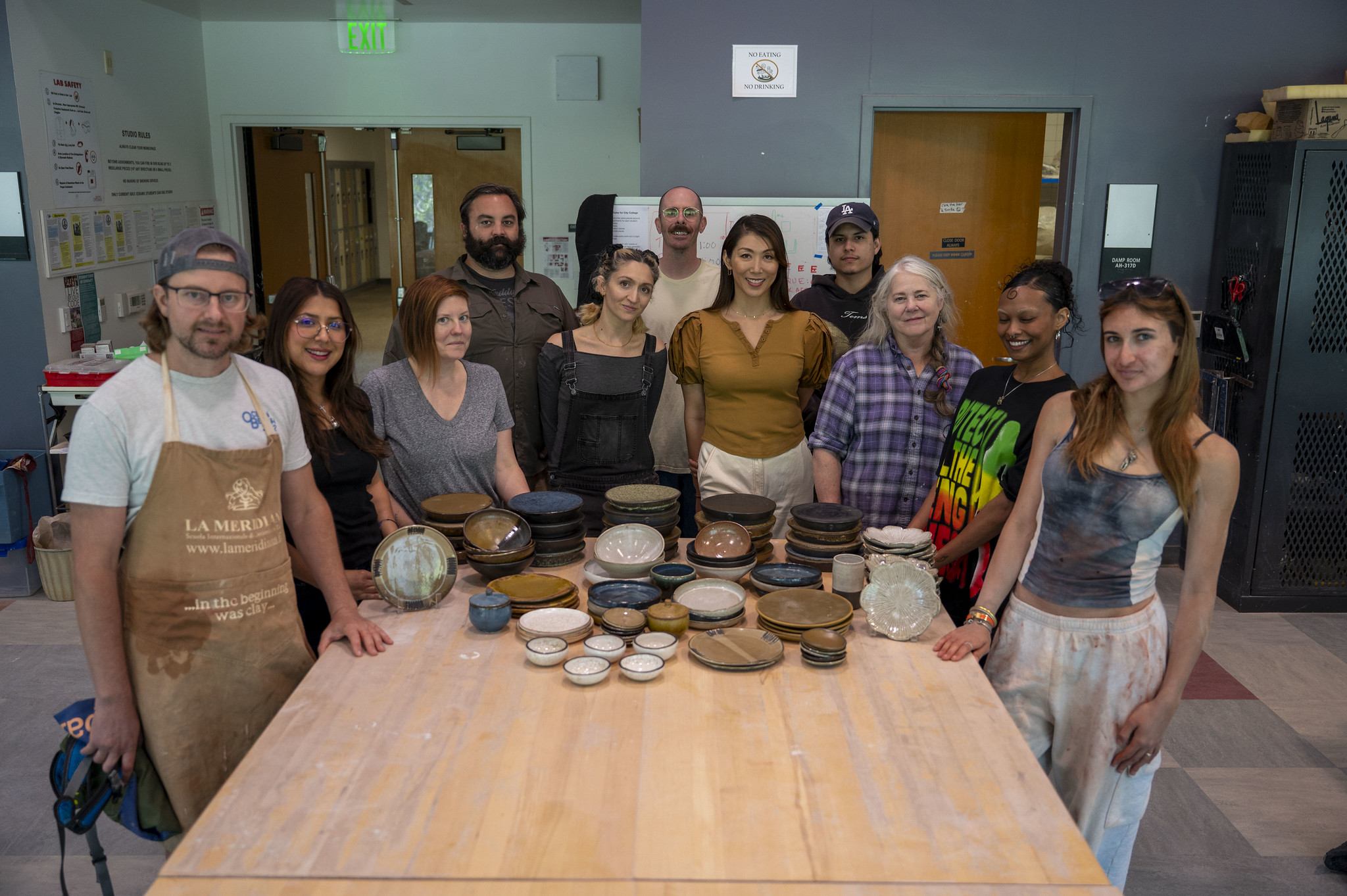
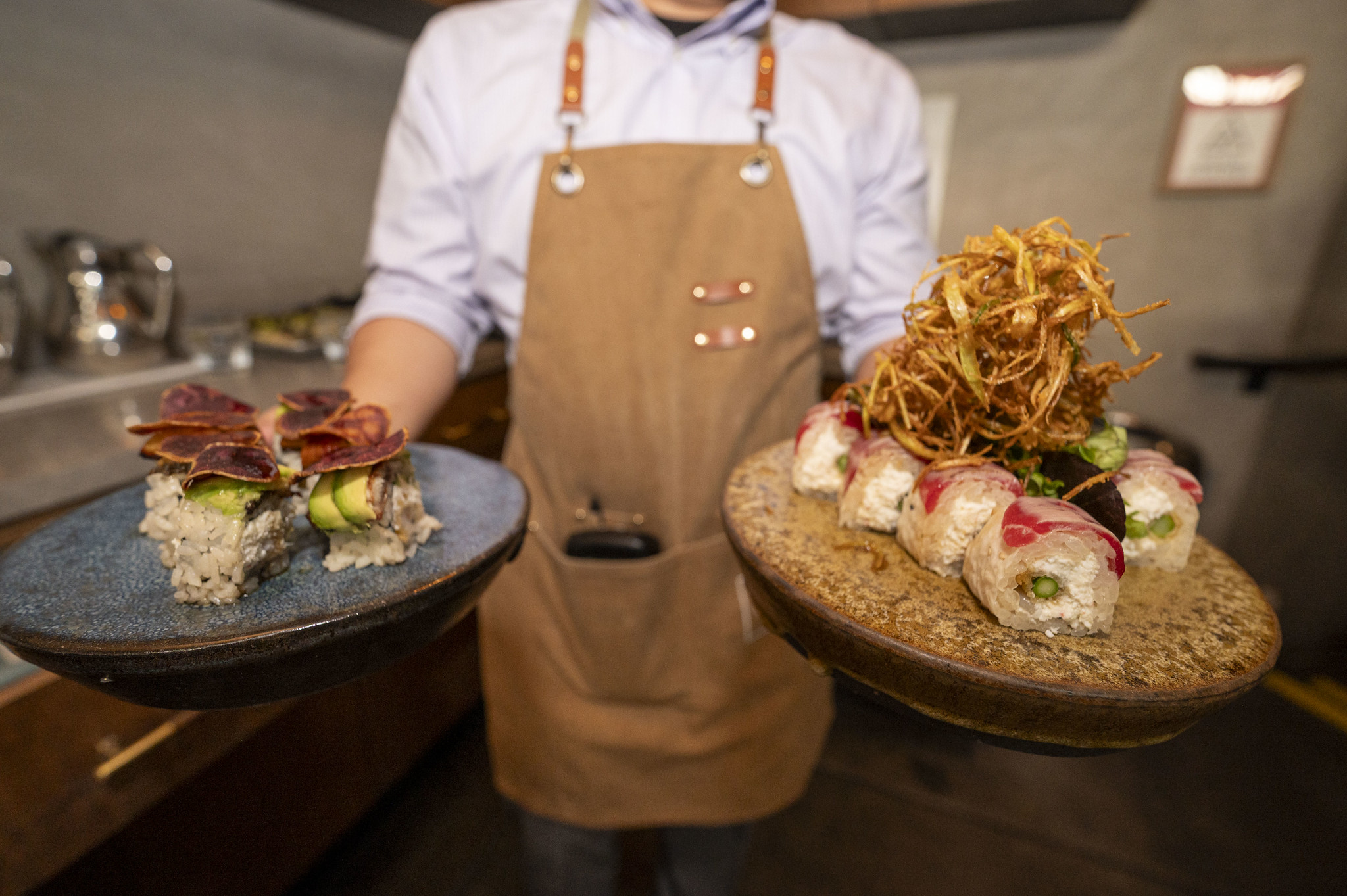
When a server at Azuki Sushi sets a bowl of chirashi in front of a guest, the dish that holds it was not pulled from a commercial catalog or shipped overnight from a warehouse. It was shaped by hand in a studio on the campus of San Diego City College, trimmed and refined over weeks, glazed with a food-safe formula engineered by a fellow student, and fired in a kiln just miles from the restaurant. For the students who made it, seeing their work on that table is something no classroom critique could replicate.
"I couldn't believe it," said Scott Beach, a studio arts student and teaching assistant in City College's production ceramics course. "That direct feedback, where you're making stuff and actually seeing it being used, is something you normally have to work your way up to get."
That feedback loop is at the heart of a partnership between City College's ceramics program and Azuki Sushi and its sister restaurant, Kinme. Now in its second semester, the collaboration has students producing functional dishware actively used in both restaurants, bridging the space between fine art and everyday life in a way that few college programs have attempted.
A Student who Became a Partner
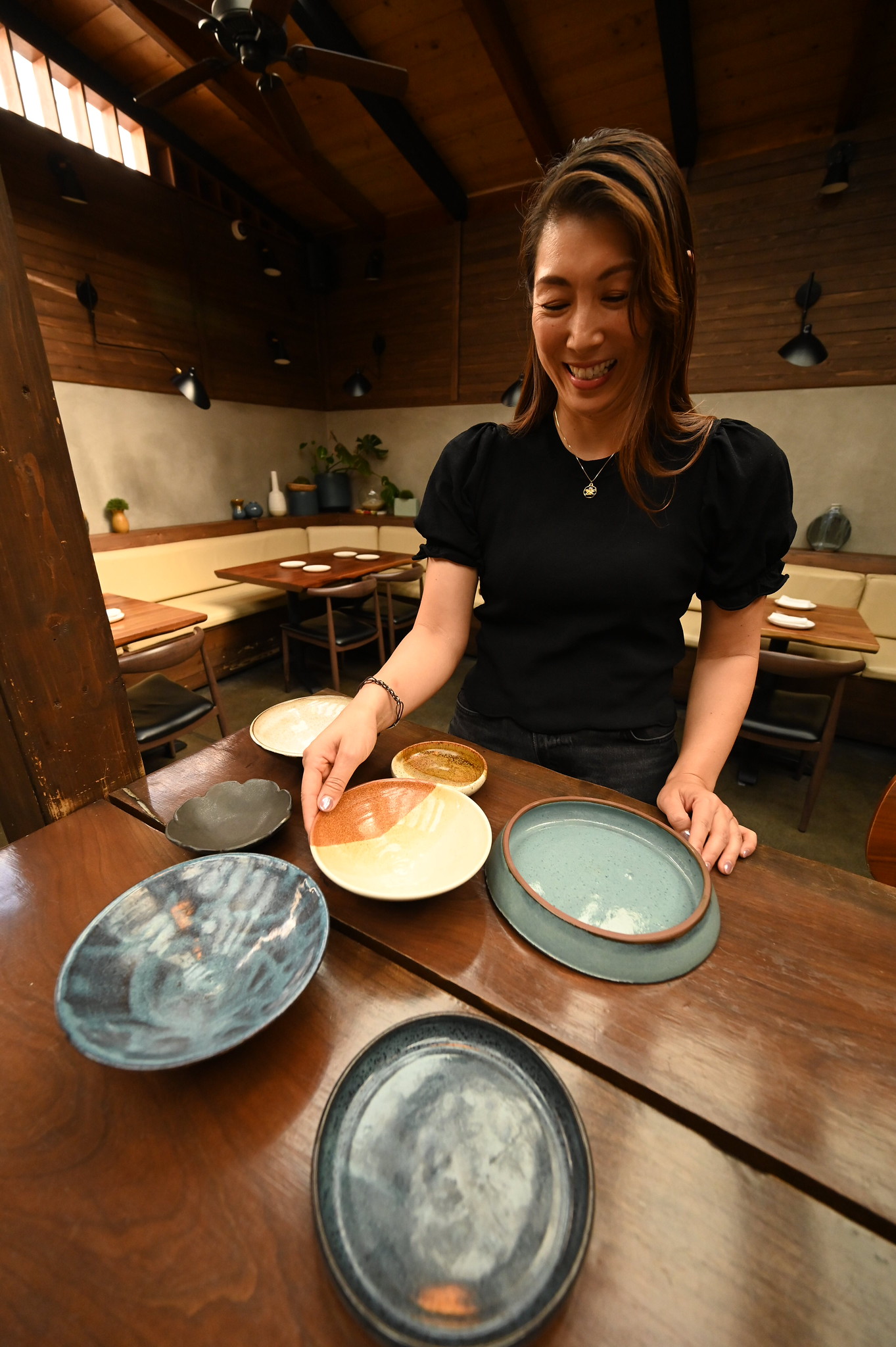
Shihomi Borillo, co-owner and creative director of Azuki and Kinme, had traveled to Japan to source ceramics for Kinme's omakase menu, a chef-curated, multi-course dining experience rooted in Japanese culinary tradition. Surrounded by handcrafted plates she loved but could not replicate back home, she returned with a growing curiosity about how ceramics were made.
"I looked at the City College catalog and there was a Ceramics 101 course," Borillo said. "I thought, maybe I can make time for once a week."
She enrolled, brought along a chef friend, and found herself genuinely hooked. Professor Anna Delgado noticed something different about her from early on. "She wants to know each aspect," Delgado said. "How is this being made? What is this? She's done so much in her own restaurant, painting the walls, real elbow grease work. She brings that same energy to everything."
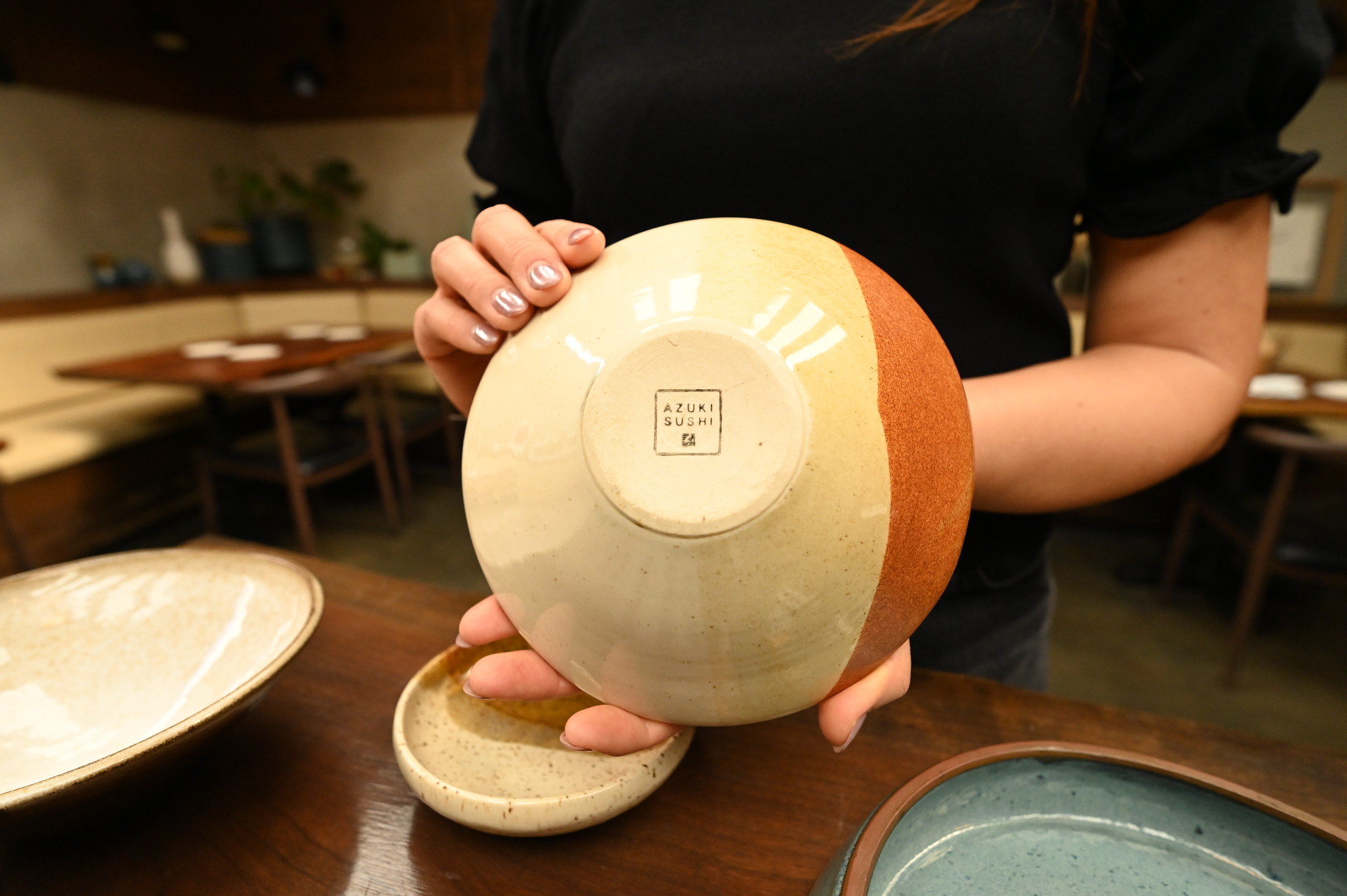
After her second semester in the studio, Borillo began thinking bigger. Importing ceramics from Japan was expensive and time-consuming. She had fallen in love with handmade dishware from a local Encinitas shop and wanted to bring something similar, something local and personal, to her own restaurants. She brought the idea to Delgado.
"She said, 'I think it's a great idea,' and then she started writing a proposal," Borillo said. "I know how hard that is. But she did it, and she told me, 'Guess what, I have a production class next semester, and we can make it for Azuki.' I couldn't believe it."
Building the Course
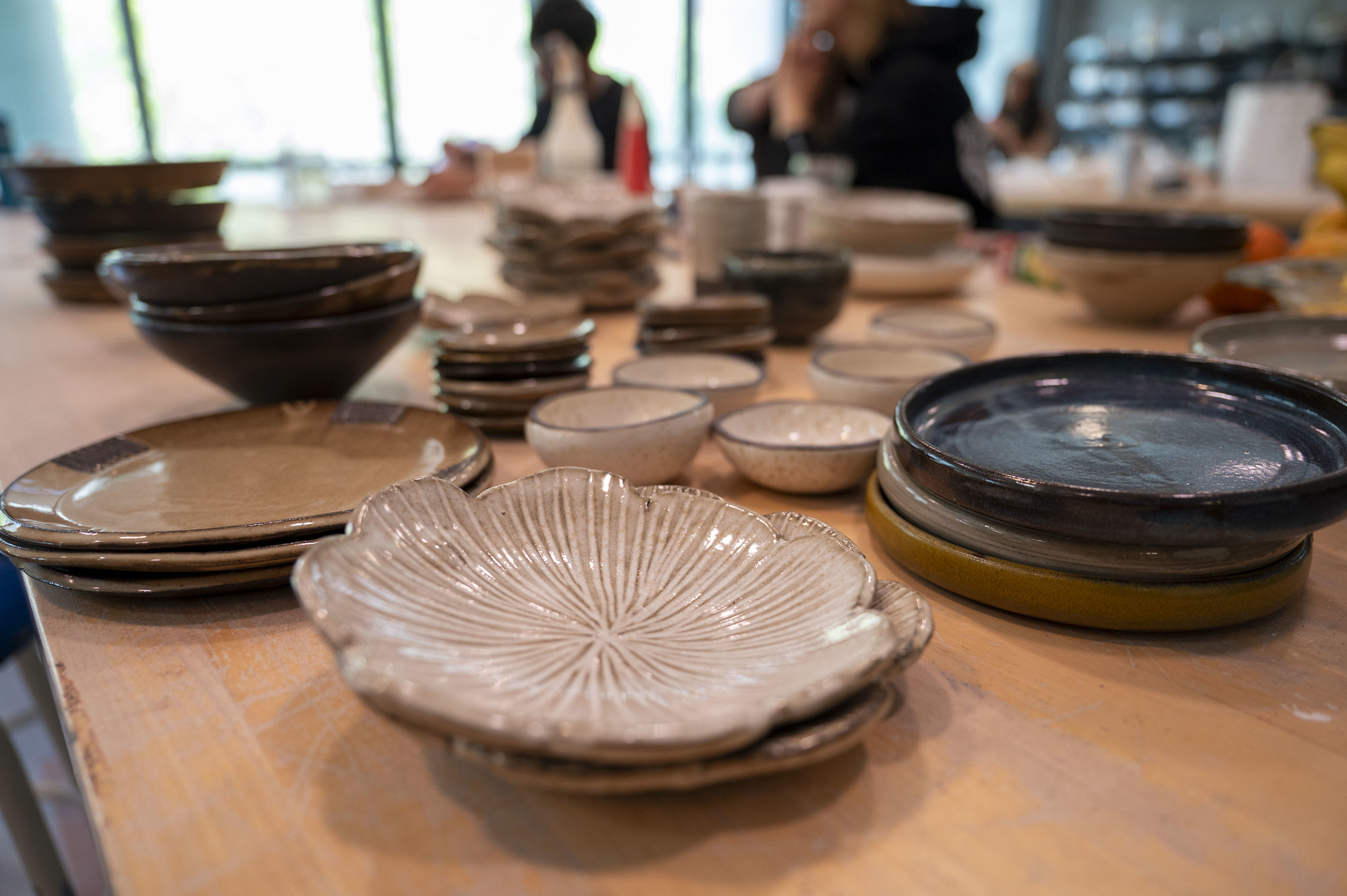
Production ceramics was already in development at City College before the Azuki partnership took shape. Delgado and fellow ceramics professor Terri Hughes-Oelrich had spent several years writing and approving the course with the goal of setting City's program apart from those at Mesa and Miramar.
"Production pottery is something people can actually go into and get a job," Delgado said. "It's hard, because in college you want to explore and make what interests you, but it also gives you a skill that other people won't have."
The first semester of the course ran in fall 2025, with the Azuki collaboration built in from the start. Borillo purchased all the clay herself, spending roughly $1,000 that semester and $1,200 the next, so students taking the course paid nothing for materials. In exchange, they produced work to a real-world standard, with feedback coming not just from their professor but from the chefs plating food on what they made.
"We found out we need to make things thick," Delgado said. "We need to make sure rims are rounded so they don't chip in the dishwasher. Not too heavy for the servers, but durable enough that they're not too thin. We found all of these things by going back and forth."
Borillo brought Japanese dishware from her travels into the studio as inspiration and hosted two dinners at Azuki for the class, where students sat down and ate off the pieces they had made. "The server walks out bringing you food in your bowl," Delgado said. "It was just so exciting."
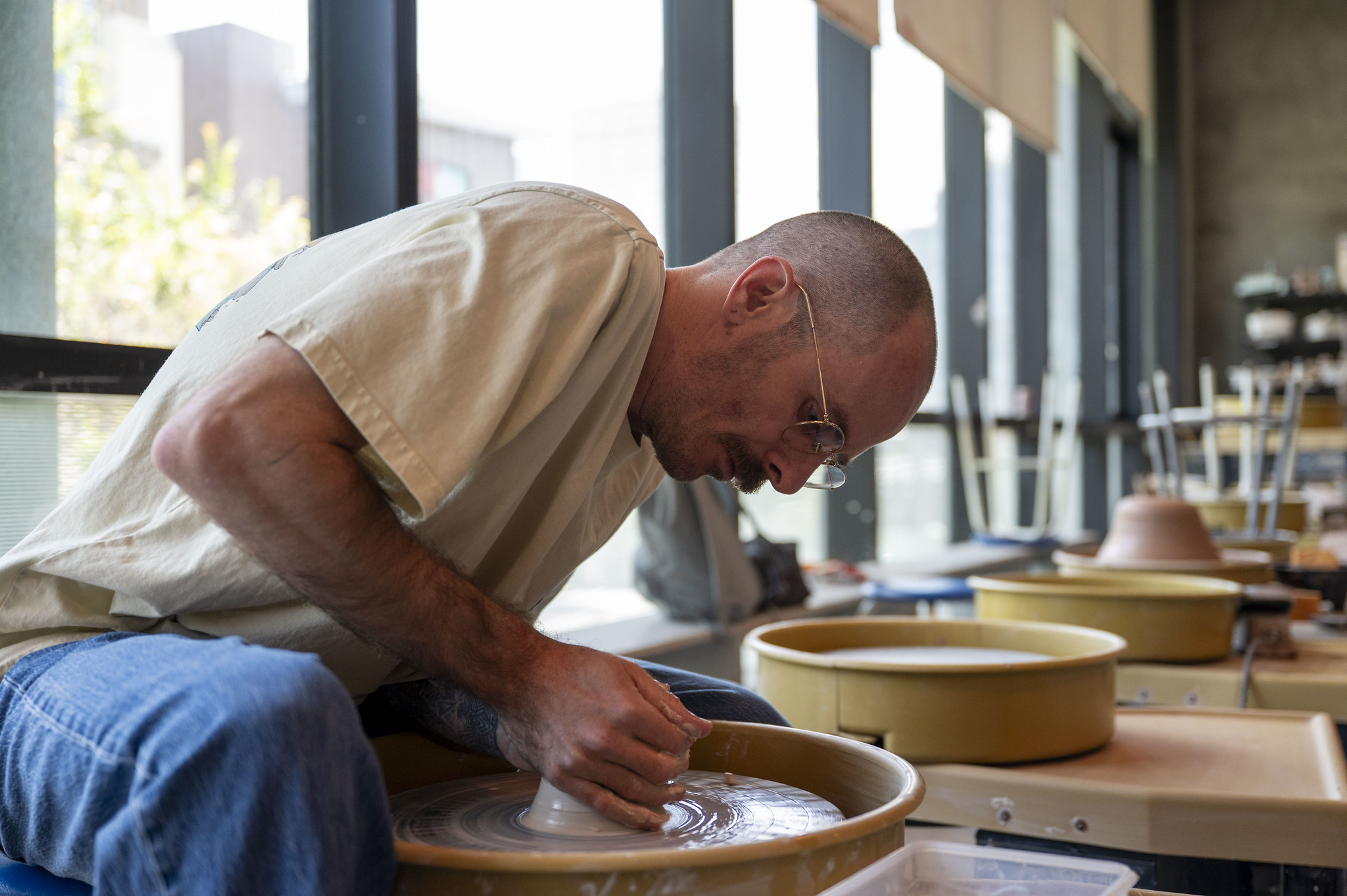
Scott Beach arrived at City College from Delaware by way of the Navy, where he worked as an avionics technician on helicopters and was stationed in Japan. After years of tech jobs following his service, he enrolled to finally pursue ceramics full time. He is now a teaching assistant in the production course and is currently making a set of 20 bowls for Kinme.
"The more comfortable I get with the basic skills, the more I can focus on refining what my style is and how I want things to function," Beach said. He carefully smooths every rim so it functions cleanly when held to a lip. "If you were to pour from it and the rim isn't right, it might catch and dribble. You want it to be intentional."
Reid Siglin, another student in the production course, took a different road to the same studio. He has a degree in information technology and spent 20 years working in the industry before returning to ceramics, which he first tried as a required fine arts elective in his twenties. He never forgot it.
"I said, someday I'll get back to it," Siglin said. "And then you get older, life goes on. I'm 42 now. So three or four years ago I was like, when's someday coming, my man?"
He joined a local studio, eventually made his way to City College, and is now working part time as a ceramics technician in the lab while taking the production course. He has already launched a small ceramics business and sees the Azuki partnership as the kind of real-world proving ground that accelerates growth in ways solo studio work cannot.
"Everything I made when I was starting off was a one of one," he said. "That's what I told myself. Oh yeah, it's unique. But no, it's just because you can't make the same thing."
The challenge of replication, he said, is what drew him to the production course specifically. And having Borillo present in the studio nearly every week, offering feedback on form and glaze, gave him a kind of validation that is hard to find elsewhere. "She knows the materials, she knows what she's looking for, and when she said, 'This is beautiful, this is perfect,' it reinforced that I'm getting to the level where I want to be."
Eating With Your Eyes
For Borillo, the partnership is not just practical. It is personal. She grew up in Yokohama, Japan, and attended City College years ago as an ESL student before eventually graduating from San Diego State University with a degree in finance. In Japanese culture, she explained, the relationship between food and the vessel it arrives in carries real meaning.
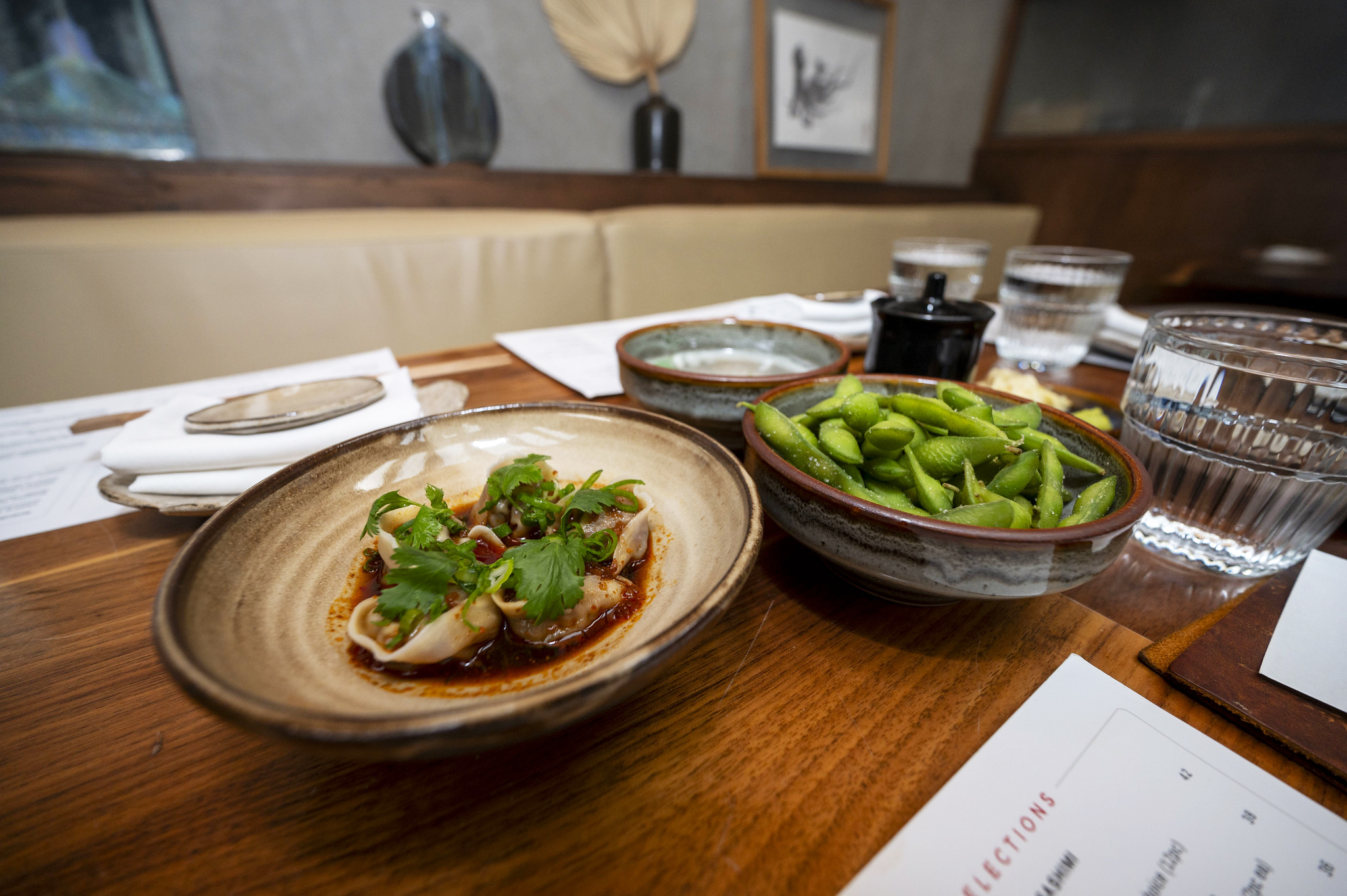
"In Japan, plates are considered like a kimono for the food," she said. "You eat with your eyes first. You eat with your whole senses."
That philosophy is visible in the pieces students have produced. The palette of deep blues and earthy tones was chosen specifically to make the food stand out. One raised, thick-edged piece originally designed to hold sashimi turned out to be equally useful flipped upside down as a pedestal, giving chefs a second way to present dessert. "They get to be more creative," Borillo said. "If it's just a standard plate, they cannot be as playful."
Students also found ways to work sustainably. Scraps and unused clay were blended together into new pieces, producing what Delgado called "happy accidents" that worked beautifully.
Beyond the Kiln
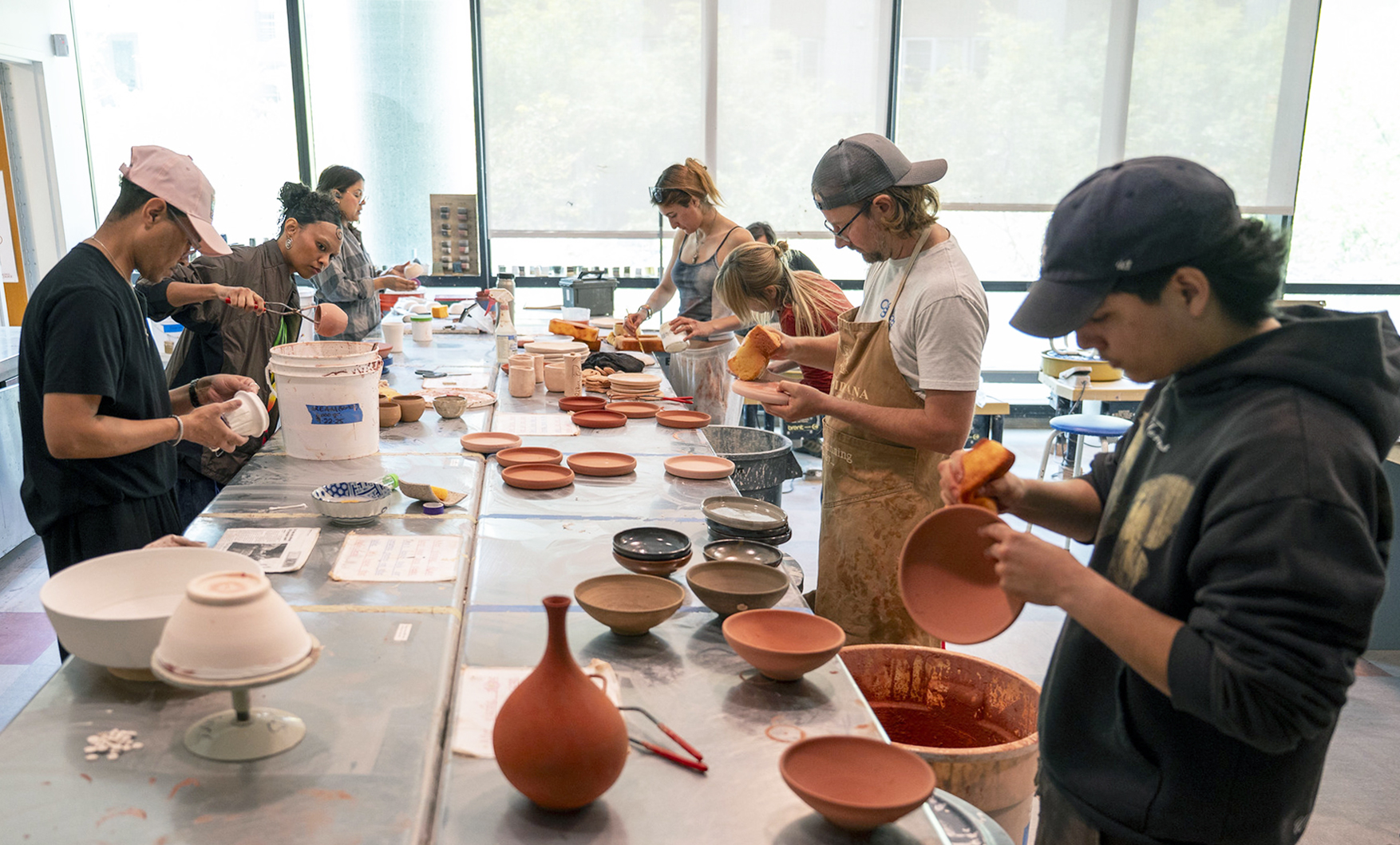
The collaboration has rippled outward in unexpected ways. At the end of last semester, several Azuki chefs came into the studio and learned to throw on the wheel themselves. One student, Ray, took it upon herself to engineer the entire glaze palette for the project, creating multiple shades of blue and testing each for food safety over several days, checking for leeching under acidic conditions like lemon and vinegar.
Delgado sees all of it as preparation for what students will face beyond City College. "You have to build thick skin when you make art," she said. "You can't be attached. You have to work with people, take feedback, change things. Unless you want to work in a silo, you have to learn that."
Next semester, the ceramics program plans to take on a public art project as a class, continuing Delgado's push to get students' work into the world before they graduate.
For Beach and Siglin, the experience is already shaping what comes next. Beach is planning to transfer to San Diego State to study studio art with a focus on vessel forms. Siglin is refining his small business one piece at a time, using every critique from the restaurant as a data point.
And for Borillo, who still takes ceramics class once a week between running two restaurants and raising a five-year-old, the partnership remains something she did not expect to find when she first opened that course catalog.
"Professor Anna really opened the door," she said. "To pretty much open this space and say, use this time, have students create something for you. That, to me, was just incredible."