
Communication Studies
The Communication Studies programs provide students the opportunity to gain effective communication skills which are essential and highly demanded in educational, professional and social settings. Through critical thinking, observation, and performance, students recognize the importance of messages in an interconnected multicultural community. The Associate of Arts or Certificate of Performance in Communication Studies offer students enhancement of self-development and foundational tools for relational success.
Program Emphasis & Goals
The Communication Studies program emphasizes proficiency in public speaking, interpersonal communication, intercultural communication, voice and articulation, small group communication, and argumentation. The Communication Studies program is committed to providing students with the theoretical and practical tools required for effective communication in fulfilling human needs and enhancing relationships in face-to-face, virtual, and cultural environments.
Why Communnications?
A degree in communications offers nearly unlimited oppportunities in a wide range of careers, graduate studies, community service, and personal development arreas. Be valued, get hired, and make a difference!
Be Valued
to be valued in each job, to have successful interpersonal relationships, and to contribute effectively as a member of a community - there are the calues of a Communications degree.
Get Hired
Accordion to a recent American ASsociation of Colleges & Universities survey, more than 80 percent of employers say that effecctive written and orral communications skills are among the most important skills thheey consider when making hiring decisions.
Make a Difference
Students emerge from Communication programs that are committed to ethical and civically productive communication with thier own commitment to using their educationn to mkae a difference.
Course Catalog Description
Click here for course description from Catalog
Program Learning Outcomes
- Students will develop effective verbal and presentational skills for a variety of communication situations.
- Students will design effective communication in order to facilitate understanding and cooperation.
- Students will research, organize, and present a developed viewpoint.
- Students will research and develop an interculturally competent viewpoint.
Here are some communication career fields:
Advertising and Public Relations, Community Service, Counseling, Education, Human Resources, Journalism, Management, Marketing, Performing Arts, Politics, Social Media, and Radio/Television/Film.

Communication Showcase
You can participate in a Communication Showcase as part of the Student Project and Research Symposium each spring working with your instructors. The showcase highlights student projects in Radio, TV, Film, Digital Journalism, and Communication Studies. You can also consider being a part of the Spoken Word, Poster Presentations, and Pre-Recorded Presentations. See more details at the symposium website.
Resources
Why Study Communication? Pathways to your future
11 Communication And Speaking Skills That Will Boost Your Reputation As A Leader
What Can You Do With A Communications Degree?
Exciting News from SDSU!

Start at City College. Finish your bachelor’s at San Diego State University. Visit SDSU Global Campus to learn more.
Bachelor of Arts in Communication Online Degree Completion
Fall start application period: October 1 - May 15
Spring start application period: June 1 - September 30
Apply here
Get Started
We're excited that you are taking the first steps on your journey towards achieving a Communication Studies Degree.
Step 1:Apply Online to San Diego City College through CCC Apply
All new students must register through CCC Apply before beginning classes at City
College.
Step 2:Watch the Online Orientation Video
The Online Orientation video will help you get to know the campus and learn about
the resources at City College that will help you succeed.
Step 3:Watch the Education Planning Workshop Videos and Meet with a Counselor to Plan your Schedule
Learn more about City College and what your Milestone levels mean through the series of videos in the online Education Planning Workshop. Then meet with a counselor to create a 1-2 semester Education Plan so that you know which classes to register for. Call the Counseling Department (619-894-6118) or schedule anonline appointmenttoday!
Step 4:Register for your Classes As Soon As Possible!
If you have trouble with registering for your classes, you can contact thePeer Advocate Center(619-800-2739).We know it can be a complicated process, but we're here to help!
Step 5:Attend your Classes!
Communication Studies Program
Courses & Descriptions
COMS 101 - Voice and Articulation (3 units)
This course is designed to improve vocal production and the articulation, enunciation, and pronunciation of words. Emphasis is placed on sound production, voice quality, volume, pitch and expressiveness. This course is intended for communications studies majors and anyone involved in theatre, sales, public services or other professions.
COMM C1000 - Intro to Public Speaking (3 units)
This course is an introduction to speechmaking. Emphasis is placed on the skills required to organize and deliver various types of speeches. Students give several speeches with and without visual aids. This course is designed for Communication Studies majors and for students interested in honing their speech skills.
COMS 104 - Advanced Public Speaking (3 units)
This course covers theory, practice, and critical analysis of public communication, including speeches on subjects of current interest both local and global. It includes an introduction to the relationship between rhetorical theory and criticism and rhetorical practice in public communication. Special emphasis is placed on advanced platform speaking and limited preparation speaking. This course is designed for students majoring in communication studies or anyone interested in advancing fundamental speech skills.
COMS 111 - Oral Interpretation (3 units)
This course is a practical study of the art of oral interpretation. Emphasis is placed
on developing a foundation for critical analyses of literature in order to enhance
spoken interpretation of prose,
poetry, dramatic monologue and duo. This course is designed for communication studies
and drama majors as well as anyone interested in improving their oratory skills.
COMS 135 - Interpersonal Communication (3 units)
This course is a study of effective interpersonal skill development and practice in oral and written communication. Emphasis is placed on the personal, situational, and cultural influences of interaction. Topics include human perception, interpersonal dynamics, listening, conflict management, and verbal and nonverbal symbol systems. The course is intended for students who communicate in one-on-one situations, including communication, fashion, allied health, public service, and business majors as well as those interested in further development of effective interpersonal skills in work, volunteer, and personal environments.
COMS 160 - Argumentation (3 units)
This course is a study of argumentation. Emphasis is placed on research, analysis of propositions, testing of evidence, construction of the brief, and preparation for presentation of constructive and refutation cases. This course is designed for communications studies majors and anyone interested in argumentation and debate.
COMS 170 - Small Group Communication (3 units)
This course is a study of the concepts and theories related to group formation and development, and basic group communication dynamics. Students lead and participate in various forms of group discussion. This course is designed for communication studies and business majors as well as for anyone interested in working effectively in small group settings.
COMS 180 - Intercultural Communication (3 units)
This course is a study of communication between members of differing cultures, including the influence of cultures, languages, and social patterns on how members of groups relate among themselves and with members of different ethnic and cultural groups. Topics include social psychological variables; verbal and nonverbal language systems; cross-cultural communication breakdowns; and conflict resolution. Students apply the principles of intercultural communication to contemporary cross-cultural and global communication issues. This course is designed for students majoring in communication studies or other fields that require cross-cultural contact and/or awareness of cultural distinctions.
COMS 201 - Communication & Community (3 units)
This course is an overview of the academic discipline of Communication Studies, including its history, methods, processes, contexts, and fields of study. Other topics include basic models of communication, communication-related career fields, and health communication. This course is intended for Communication Studies majors or prospective majors.
Associate of Arts Degree in Communication Studies
Requires 18 units
Courses Required for the Major:
COMM C1000 Intro to Public Speaking (3 units)
Select 15 units from:
COMS 101 Voice and Articulation (3 units)
COMS 104 Advanced Public Communication (3 units)
COMS 135 Interpersonal Communication (3 units)
COMS 160 Argumentation (3 units)
COMS 170 Small Group Communication (3 units)
COMS 180 Intercultural Communication (3 units)
Total Units = 18*
*Additional general education and graduation requirements for the associate degree are listed in the catalog. The associate degree requires a minimum of 60 units.
Transfer Information
Common university majors related to the field of Communication Studies include: Communication, Communicative Disorders, Graphic Communications, Journalism, Marketing, Public Relations.
Course Requirements for Transfer Students: Students who plan to transfer to a four year college or university and earn a bachelor's degree in this discipline should consult with a counselor or visit the Transfer/Career Center to determine the appropriate major preparation courses for their specific transfer institution and major. Transfer students may also earn an Associate of Arts degree in Liberal Arts and Sciences with an emphasis. This degree may be individually tailored to each student's specific transfer requirements in order to provide the most efficient path to transfer. More information on transfer programs and procedures is available in the Transfer Programs section of the catalog
Associate in Arts in Communication Studies 2.0 for Transfer Degree
Requires 18 units in the major
The Associate in Arts in Communication Studies 2.0 for Transfer Degree (AA-T) is designed for students who plan to complete a bachelor’s degree in Communication Studies or a related major within the California State University (CSU) system.
Students who complete an approved Associate Degree for Transfer and meet CSU admission requirements receive priority admission consideration to the CSU system. When the Communication Studies 2.0 AA-T is considered similar to the bachelor’s degree program at the CSU campus to which the student transfers, the student can complete the bachelor’s degree with no more than 60 additional semester units after transfer. Admission to a particular CSU campus or major is not guaranteed.
Students should consult with a counselor and review ASSIST to determine the appropriate coursework for their intended university and major.
Courses Required for the Major
Required Core – 6 units
COMM C1000 Introduction to Public Speaking (3 units)
COMS 135 Interpersonal Communication (3 units)
Select three of the following courses – 9 units
COMS 104 Advanced Public Communication (3 units)
COMS 160 Argumentation (3 units)
COMS 170 Small Group Communication (3 units)
COMS 180 Intercultural Communication (3 units)
COMS 201 Communication and Community (3 units)
Select one additional course – 3 units
Select one of the following courses not selected above to meet lower-division preparation for the major at your intended transfer university:
COMS 104 Advanced Public Communication (3 units)
COMS 111 Oral Interpretation (3 units)
COMS 160 Argumentation (3 units)
COMS 170 Small Group Communication (3 units)
COMS 180 Intercultural Communication (3 units)
COMS 201 Communication and Community (3 units)
Total Major Units: 18
Communication Studies and Cal-GETC
Communication Studies courses can help students complete both major and general education requirements. Students in any major can also take Communication Studies courses to fulfill specific Cal-GETC requirements while developing valuable communication skills.
| Communication Studies Course | Cal-GETC Requirement | Communication Studies AA-T | For Students in Any Major |
|---|---|---|---|
| COMM C1000 Introduction to Public Speaking | Area 1C: Oral Communication | Required | Fulfills Cal-GETC Area 1C Oral Communication. |
| COMS 135 Interpersonal Communication | Area 4: Social & Behavioral Sciences | Required | Fulfills one Area 4 course. |
| COMS 201 Communication and Community | Area 4: Social & Behavioral Sciences | Major elective option | Fulfills one Area 4 course. |
| COMS 104 Advanced Public Communication | Major elective option | Transferable course; may apply toward major preparation or electives. | |
| COMS 111 Oral Interpretation | Major elective option | Transferable course; may apply toward major preparation or electives. | |
| COMS 160 Argumentation | Major elective option | Transferable course; may apply toward major preparation or electives. | |
| COMS 170 Small Group Communication | Major elective option | Transferable course; may apply toward major preparation or electives. | |
| COMS 180 Intercultural Communication | Major elective option | Transferable course; may apply toward major preparation or electives. |
For Communication Studies majors: COMM C1000 and COMS 135 are required for the AA-T and also satisfy Cal-GETC requirements, allowing these courses to count toward both the major and general education.
For students in other majors: COMM C1000 fulfills Cal-GETC Area 1C: Oral Communication, while COMS 135 or COMS 201 can fulfill one course in Cal-GETC Area 4: Social & Behavioral Sciences.
Area 4 Note: Cal-GETC requires two Area 4 courses from two different academic disciplines. Students may use COMS 135 or COMS 201 toward Area 4 and complete the second Area 4 course in another approved discipline.
Cal-GETC General Education
Beginning Fall 2025, Cal-GETC became the singular lower-division general education transfer pattern for California Community College students transferring to the California State University (CSU) or University of California (UC) systems.
Cal-GETC requires 34 semester units across the following areas:
Area 1: English Communication
Area 2: Mathematical Concepts and Quantitative Reasoning
Area 3: Arts and Humanities
Area 4: Social and Behavioral Sciences
Area 5: Physical and Biological Sciences
Area 6: Ethnic Studies
Students should work with a counselor to determine the appropriate general education and major-preparation courses for their transfer goals.
Total Degree Requirements
Students completing the Communication Studies 2.0 AA-T must complete 60 CSU-transferable semester units, including major requirements, applicable general education requirements, and transferable electives as needed.
Some courses may satisfy both major and Cal-GETC requirements.
Students who began college before Fall 2025 may have catalog rights that allow them to complete an earlier CSU GE-Breadth or IGETC pattern. Students should consult with a counselor to determine which requirements apply to them.
Planning to transfer? Meet with a counselor and visit ASSIST for guidance on appropriate lower-division major preparation and transfer coursework for your intended university and major.
COMS Certificates of Performance
Certificates of Performance*
We now offer 4 Certificates of Performance in Communication Studies (COMS). Once you have taken the appropriate classes, received a C or better, and a grade has been recorded in those classes, you have earned a Certificate of Performance in any of the following areas for which you have qualified. Because these are campus awards, all classes have to be completed at City College. You can apply for more than one Certificate of Performance.
*A Certificate of Performance is a departmental award that does not appear on the student's transcript.
Note: This program is not eligible for federal financial aid in accordance with Federal regulations
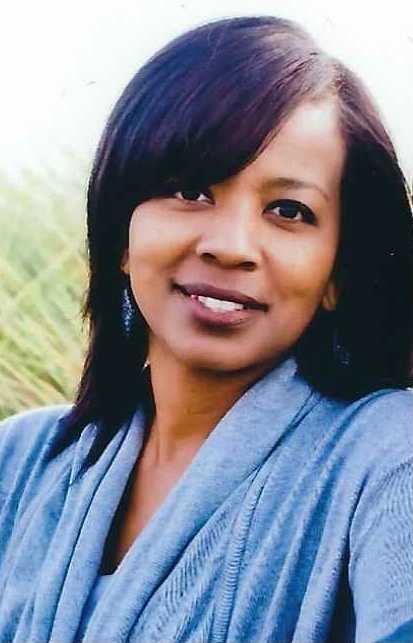 |
Deanna Shelton, M.A. (she, hers,her)| Professor, Communication Studies & Communications ChairCity College Communication Studies faculty is here for you! Teaching COMM C1000 Intro to Public Speaking, COMS 135 Interpersonal Communication, and COMS 170 Small Group Communication has been my emphasis for many years. My southern roots to sunny San Diego include a Bachelor of Science in Communication from the University of Texas at Austin and a Master of Arts in Communication from San Diego State University. Along that path, I worked in the areas of advertising, sales, and marketing with organizations, including Hyatt Hotels and The San Diego Union-Tribune. Currently, I serve as Chair of the Communication Studies program and Chair of the Diversity Committee. I ask students to put their antennas up as we analyze the messages all around us...that is our spectacular world of Communication Studies! Outside of work, my focus is family, husband, three teenage-to-adult children, dog Dash, and supporting the community through non-for-profit groups. |
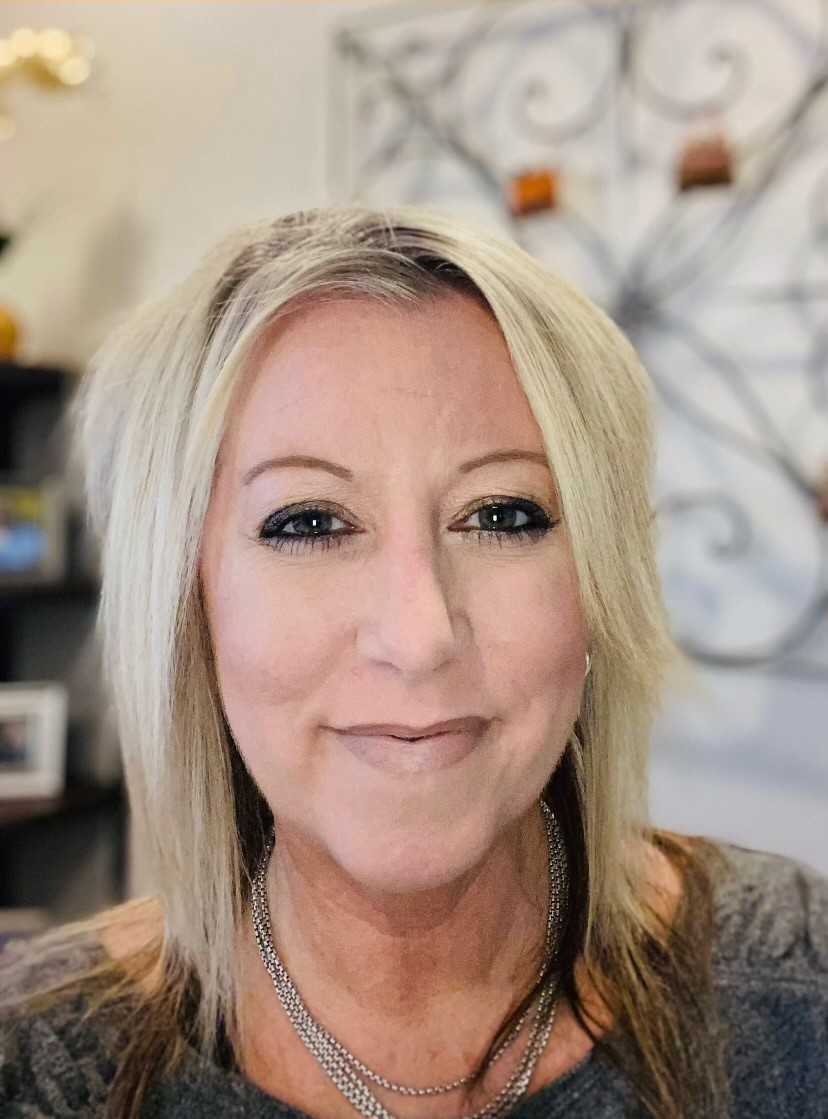 |
Erin Engstrom, M.A. (she, hers, her) | Professor, Communication StudiesHi! I am Erin. I have been teaching at City College since 2006. I teach Advanced Public Speaking (COMS 104), Argumentation (COMS 160), and Intercultural Communication (COMS 180). I grew up north of Seattle and went to University of Washington, moved to Colorado for graduate school, then back out to the coast landing here in California. I am a kid mom, a dog mom, and a cat mom. My family has a place in Mexico so we take off for either Mexico or the Pacific Northwest every chance we get. I love to teach and have a lot of fun in the classroom. Welcome to City College. You are going to love it here! |
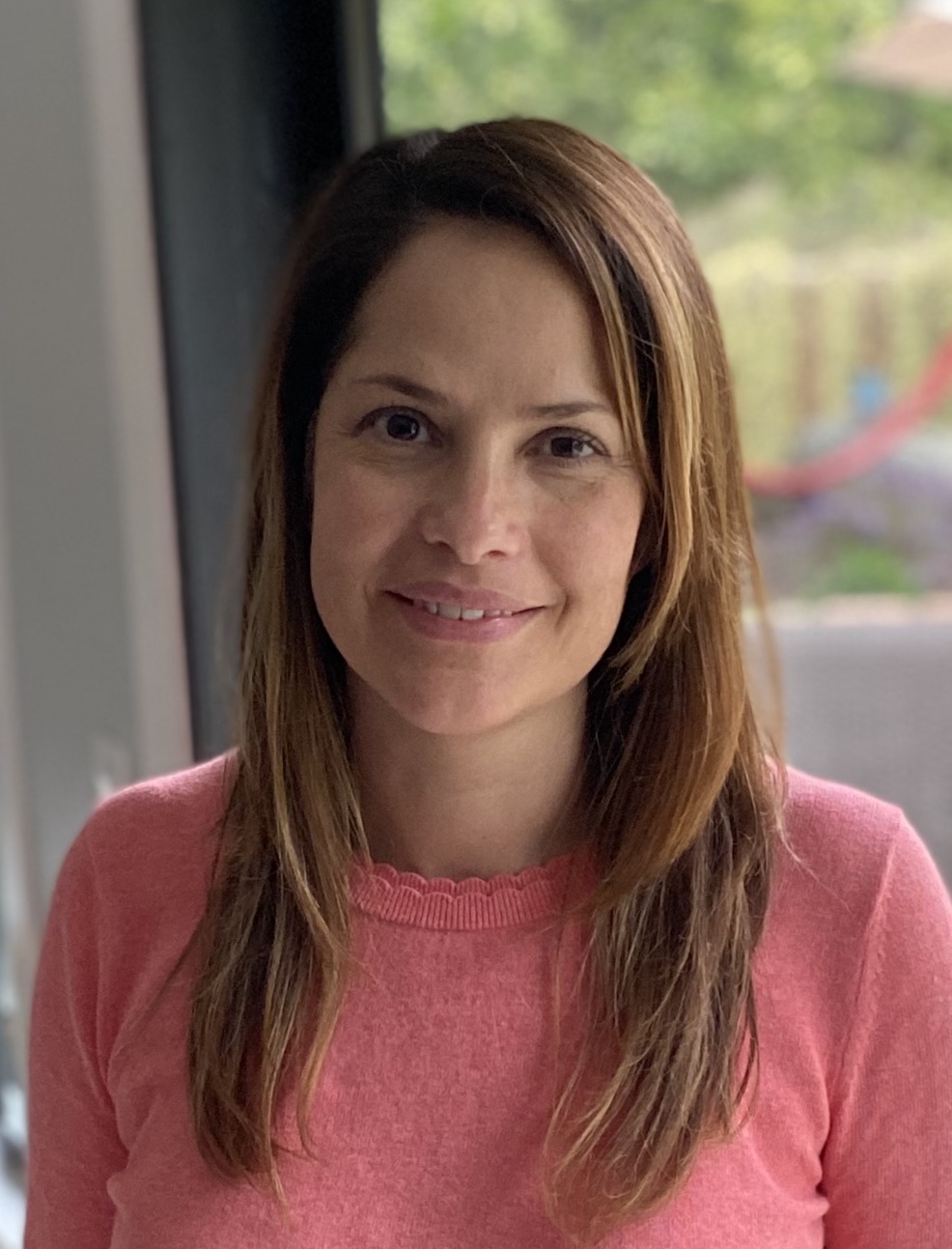 |
Maria-Jose Zeledon-Perez, Ed.D. (she, hers, her) | Professor, Communication StudiesWelcome to City College! I have been teaching Intro to Public Speaking (COMM C1000), Interpersonal (COMS 135) and Intercultural Communication (COMS 180) courses for many years. I also coordinate the amazing World Cultures Program. I graduated from SDSU with a Doctorate in Educational Leadership with concentration in community colleges (CCLEAD) and a Master of Arts in Communication Studies. I love our field as I refer to communication skills as "life skills". I was born and raised in Costa Rica and my native language is Spanish. A fun fact about me is that besides living with my husband and two teenagers, we also live with a mini pig, a dog, two horses and two mini donkeys. My motto is "Life is an adventure. Be uncomfortable until you become comfortable". |
 |
Ambarta Noor, M.A. (she, hers, her) | Assistant Professor, Communication StudiesSalaam, I’m Ambarta Noor. I started out in the same City College classrooms where you sit now, wandered off to SDSU, and somehow never stopped talking about talking. To me, communication is a continuum, and every student who enters the classroom brings a new edition of our shared textbook. You don’t need to sound like anyone else here. The voice shaped by your culture, your history, and your own rhythm is more powerful than perfect. |
 |
Kimberlee Wirig, M. A.I began studying communication when I was in the 4th grade. I grew up in Canada. In Canada students can study Speech Communication one on one, the same way they can study piano. I earned a Teaching Certificate from Mount Royal College Academy of Music when I was 18 years old. From there I attended Rick's College in Idaho where I met and married my husband. We had 3 children when I returned to school at Eastern New Mexico University where I earned both my Bachelor's and Master's Degrees. In the middle of my Master's program our 4th child was born. She had a lot of health issues one of which is that she is Deaf. This means she is a plethora of excellent examples of communication difficulties. In class, you will likely learn from some of the issues she faced and, for the most part, has overcome. I have been teaching in San Diego since January of 2000. If you have any concerns, questions and/or struggles in this class please come see me. My classes tend to be set up to help YOU be successful. If you are struggling I can't help you if you don't come to me. I promise, I don't bite. |
 |
Jennifer Peralta, M. A.Jennifer Peralta currently teaches COMs 103 (Oral Communication) and COMs 135 (Interpersonal Communication) at San Diego City College. She received a bachelor’s degree in Communication and a master’s degree in strategic communication. She’s a bilingual educator, and Alumna from San Diego City College. She loves teaching and to share her passion for communication. She always became interested on why humans communicate the way they do and most importantly how can we make this world a better place by using the basic foundations of communication. |
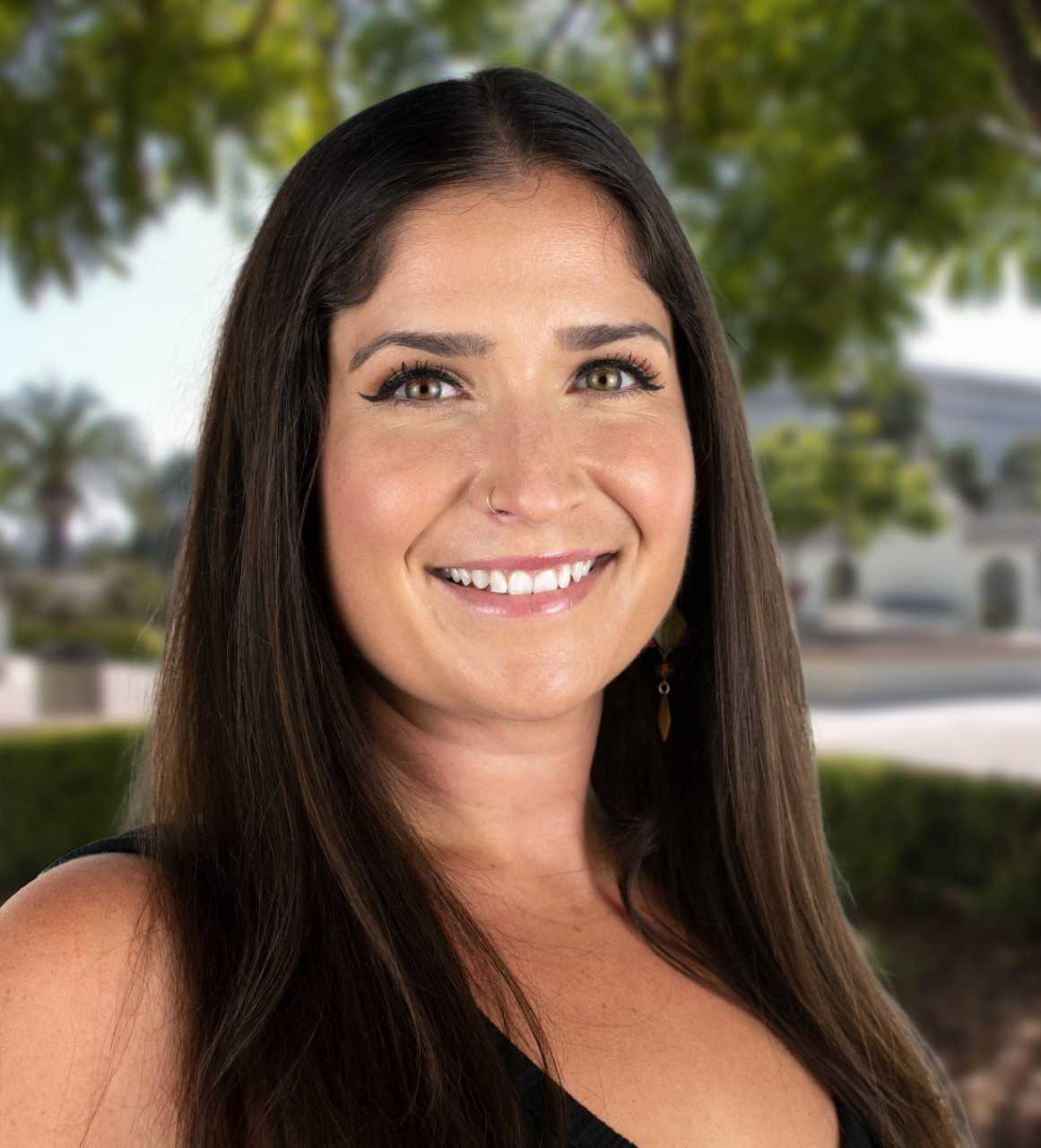 |
Carly DeAnda, M. A. (she, her, hers)Hello and Welcome to City College. I have taught COMS 103 (Public Speaking) courses here for the past three years. I graduated from SDSU with a Masters in Communication Studies in 2017 and have been teaching every since. I am fascinated by the way we use language to shape our worldviews. The majority of what I studied at SDSU focused on Immigration and Political Rhetoric. I am the mother of Sofia Rose, a nine year old who keeps me in a constant state of learning. I spent the first half of my life in Madrid, Spain, which is where I found my passion for tennis. I played all throughout college and coached the Women's College team. I believe that the classroom is one of the rarest spaces we get to enter, where being wrong, asking tough questions, and expanding our perspectives is encouraged and respected. It is a sacred space, and one that I am honored to be a part of. |
Lindsay Jacobs |
|
Joseph Berry |
|
Chris Rubin |
|
Andre Pitts |
|
Beverly Natividad |
|
Will Wilson |
|
Daniel Young |
|
Joanna Kahlow |
|
Paige Hifner |
|
Ryan Montez |
Need Help? Contact Us!
If you have any questions about enrolling in our Communication Studies program, please contact us.
We are here to help!
Deanna Shelton, Communications Chair, [email protected]
Erin Engstrom, Faculty, [email protected]
Maria-Jose Zeledon-Perez, Faculty, [email protected]
Ambarta Noor, Faculty, [email protected]